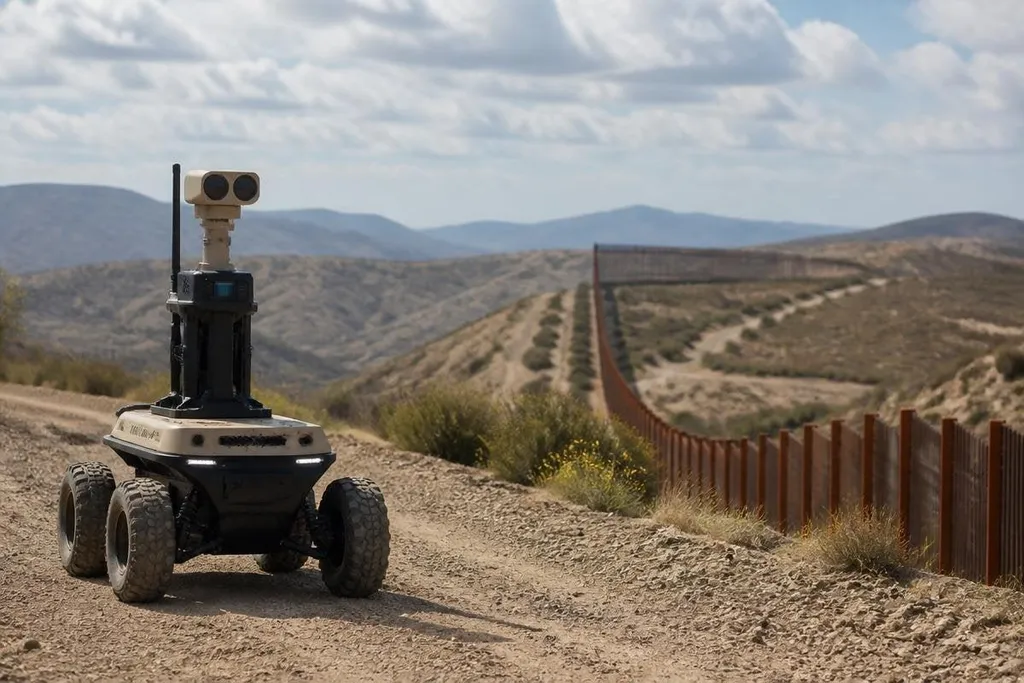
A robot can watch a remote border area for long periods without sending a person into rough ground or poor visibility. That can reduce exposure to danger, but it also creates new problems when sensors misread people, links fail, or agencies use machines beyond their original task.
Quick read
- Ground robots can carry cameras, thermal sensors, and radios into areas that are hard for patrol teams to reach.
- Drones can send alerts quickly, but wind, darkness, and weak communications can reduce what operators see.
- Human review, clear use rules, and public records matter as much as the robot itself.
Where robots can help
A ground robot can move along a marked route and send video or sensor data to a remote operator. That gives a patrol team more information before anyone walks into an area with unstable ground, extreme heat, or a possible armed threat.
Drones work from above. Their cameras can cover a wide area, while thermal sensors may help operators spot heat sources at night. The value comes from early information, not from giving the machine authority to decide what a person is doing.
Robots can also carry equipment. A machine may transport a radio, a light, or a small sensor package while people stay at a safer distance. The exact benefit depends on battery life, weather limits, terrain, and the quality of the communication link.
That last point matters. A robot that reaches a remote area but cannot send usable data has not solved the patrol problem.
Where the risks start
Sensors do not see events in the same way people do. A camera may lose detail in darkness, dust, glare, or heavy rain. A thermal sensor can show heat without explaining its source.
Software may flag an animal, a piece of clothing, or a person carrying a tool as a possible threat. False alerts create work for operators and can pull patrol teams toward the wrong location. Missed alerts create a more serious problem because a machine may report an area as clear when its view was blocked or its link had dropped.
Autonomy adds another layer. When the machine follows a route on its own, patrols can become more regular, but an autonomous system should not decide to stop, search, detain, or use force. Those actions need a human decision and a clear legal basis.
Cybersecurity also belongs in the basic safety review. A stolen control signal, altered map, or exposed video feed could put people at risk. Agencies need records showing who accessed the system, what commands were sent, and when a person took control.
Human control and public trust
The person watching the screen needs enough context to judge an alert. A red box around a shape is not an explanation. Operators need the raw view, the sensor type, the time of the alert, and a clear way to check the scene before they act.
Privacy rules matter too. Cameras and thermal sensors can collect information about people who are not suspected of wrongdoing. Agencies should set limits for storage, access, sharing, and deletion before the first patrol begins.
A border agency should publish the robot’s patrol area, sensor types, test date, and human review rule before deployment. Border robotics reporting can tie those details to claims about detection or tracking. That record lets people judge the system before it affects someone’s rights.
Public trust depends on more than a successful trial. People need to know where the robot operates, what it records, who reviews alerts, and what happens after a system makes a mistake. A clear complaint process gives affected people a way to challenge an action or a record.
Before a deployment
A border agency should answer these questions in writing before buying or testing a robot:
- Define the task: Is the machine watching, carrying equipment, mapping ground, or helping with rescue?
- Set human control: Which actions need approval, and how fast can an operator stop the robot?
- Test the weak points: Run checks in darkness, rain, dust, rough ground, and poor network coverage.
- Record mistakes: Keep false alerts, missed detections, link losses, repairs, and operator overrides in one reviewable log.
- Limit the data: State how long video and sensor records remain stored, who can see them, and when they are deleted.
- Plan for failure: Keep a safe recovery method for a stalled robot, a lost signal, a drained battery, or a damaged sensor.
The list is practical because a patrol robot is part of a working system, not a stand-alone camera on wheels. Its value should be measured by safer decisions and usable records, while its errors remain visible to the people responsible for the deployment.
I'd use these machines first for observation, transport, and rescue support, where a person can review the result before action follows. Wider use should wait until agencies can show the error log, the control rules, and the legal basis for every task.